Home · How it was built
Materials and labour, as the sources put them
How it was built
UNESCO’s official short description says that in about 220 B.C., under Qin Shi Huang, sections of earlier fortifications were joined together to form a united defence system against invasions from the north. [UNESCO]
In the 3rd century BCE, Britannica says, Shihuangdi (Qin Shihuang), the first emperor of a united China, connected a number of existing defensive walls into a single system. [Britannica]
Britannica dates the Qin period of construction to about 214 BCE, lasting a decade, and says hundreds of thousands of soldiers and conscripted workers laboured on the project. [Britannica]
UNESCO illustrates the wall’s testimony to ancient Chinese civilisations by the rammed-earth sections of Western Han fortifications conserved in Gansu, as well as by the masonry of the Ming period. [UNESCO]
The same official text says construction continued up to the Ming dynasty (1368–1644), when the Great Wall became the world’s largest military structure. [UNESCO]
Its main body, UNESCO says, consists of walls, horse tracks, watch towers and shelters on the wall, and includes fortresses and passes along the Wall. [UNESCO]
About one-fourth of that Ming length, Britannica says, consists solely of natural barriers such as rivers and mountain ridges; about 70 percent is actual constructed wall, and the small remaining stretches are ditches or moats. [Britannica]
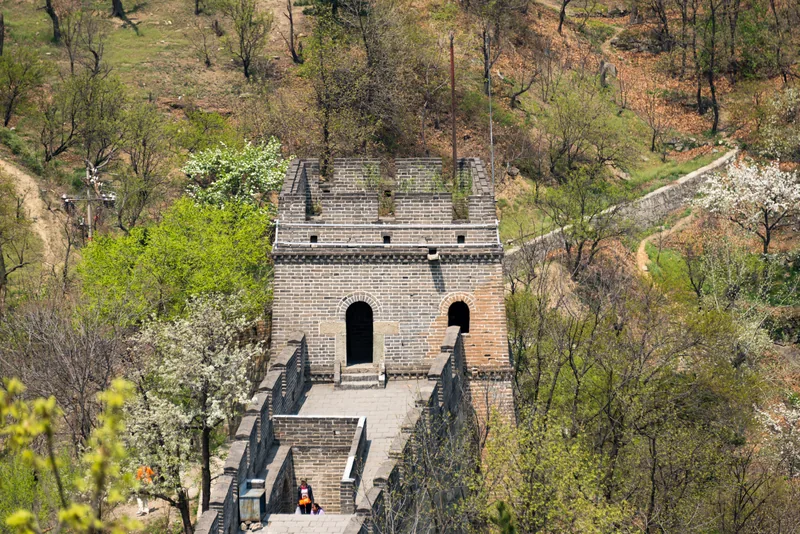
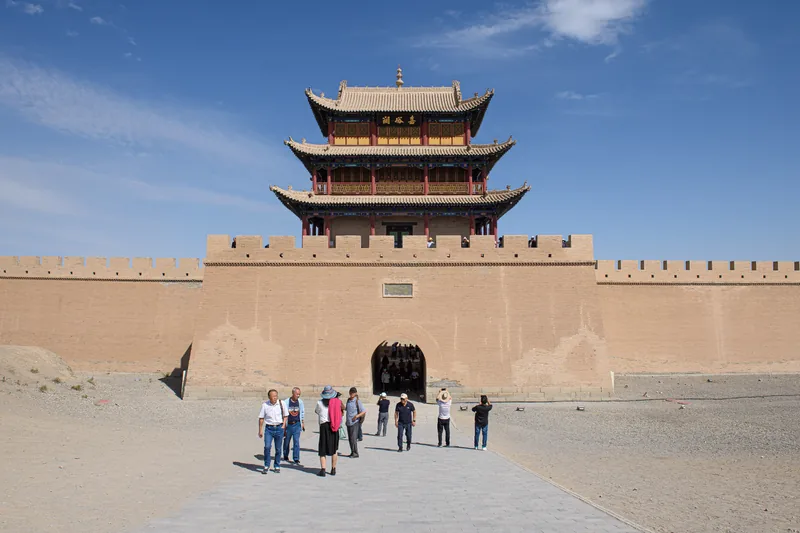
The Mutianyu watchtower is brick masonry of the kind most visitors see near Beijing. UNESCO also points to rammed-earth work of the Western Han, conserved in Gansu, and the fortress at Jiayu Pass, in the photographs, is packed earth in a very different landscape. Materials followed place.
Only 8.2% of the original wall remains intact, with the rest in poor condition, according to the report as quoted by the BBC. The BBC does not spell out how “original” was defined. [BBC News]
That 8.2% figure is in the BBC’s report of the official announcement. The BBC does not define “original wall” in the same paragraph, so we leave the number attributed and not turned into a slogan.
Sources on this page
- UNESCO World Heritage Centre, official short description of The Great Wall (list 438)
- Encyclopaedia Britannica, Great Wall of China (editors’ main article, including the “Top Questions” answers on the same page; checked 15 November 2026)
- UNESCO World Heritage Centre, Statement of Outstanding Universal Value for The Great Wall (list 438); checked 15 November 2026
- BBC News, “China’s Great Wall is ‘longer than previously thought’” (6 June 2012), reporting a State Administration of Cultural Heritage survey via Xinhua